

Keynote speakers
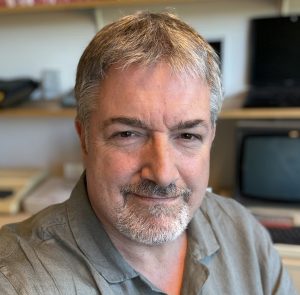
Title: Protecting the Human Endpoint
Bio:
Steven Furnell is Professor of Cyber Security in the School of Computer Science at the University of Nottingham. His research interests include security awareness and culture, and usability of security. He has authored over 430 papers in refereed international journals and conference proceedings, as well as various books, book chapters, and industry reports. Amongst his various roles and responsibilities, Steve is the UK representative to Technical Committee 11 (security and privacy) within the International Federation for Information Processing, a board member of the Chartered Institute of Information Security, a member of the Steering Group for the Cyber Security Body of Knowledge (CyBOK), and the Editor of Computers & Security.
Abstract
Title: Protecting the Human Endpoint
Cyber security continues to benefit from improvements in the technologies that protect our devices and the communications between them. However, cyber security demands holistic solutions, and technological advancements do not remove the need to support the key component sitting at the endpoint – namely the human user. People are frequently blamed for cyber security breaches and stereotyped as the weakest link. However, links can be expected to be weak if little or nothing has been done to strengthen them. This presentation examines the cyber security awareness and literacy support that ought to be provided to users, and the extent to which these are typically addressed in practice. Recognising that many users will often perceive cyber security to be unrelatable or inaccessible, the talk also discusses ways to increase user interest and engagement through gamification of basic cyber awareness concepts.
Thus, the concept of connected and translational health has started evolving steadily, connecting pervasive health systems, using new predictive models, new approaches in biological systems modeling and simulation, as well as fusing data and information from different pipelines for more efficient diagnosis and disease management.
In this talk, we will present the current state-of-the-art in personalized health care by presenting cases from COVID-19 and COPD patients using advanced wearable vests and new technology sensors including lung sound and EIT, new outcome prediction models in COVID-19 ICU patients fusing X-Rays, lung sounds, and ICU parameters transformed via AI/ML/DL pipelines, new approaches fusing environmental stressors with -omics analytics for chronic disease management, and finally new ML/AI-driven methodologies for predicting mental health diseases including suicidality, anxiety, and depression.
Title: Mapping the Post-Quantum Standards Landscape: From Basic Primitives to Advanced Cryptography
Bio:
More details:
https://www.surrey.ac.uk/people/liqun-chen
Abstract
The post-quantum (PQ) standardisation of basic primitives — key encapsulation mechanisms (KEMs) and digital signatures — is reaching maturity: NIST has published FIPS 203, 204 and 205, with FIPS 206 and the code-based KEM HQC in progress, and ISO/IEC, IETF and many other bodies are actively developing PQ standards of their own. Far less attention has been paid to the advanced primitives, where migrating to a quantum-safe footing is markedly harder than replacing a KEM or a signature scheme. This talk first reviews the current landscape of post-quantum cryptography standardisation across international, national, industrial and community standards bodies, then turns to the advanced setting: the challenges that make standardisation difficult, and the efforts now under way for homomorphic encryption, secure multi-party computation, zero-knowledge proofs, identity- and attribute-based cryptography, threshold cryptography, anonymous credentials, group and ring signatures, and direct anonymous attestation.
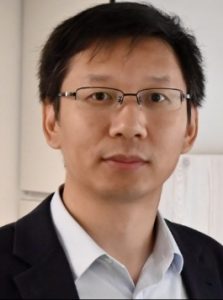
Title: Trustworthy Agentic AI over Networks: Coordination and Consensus in Autonomous Systems
Bio:
Dr. Lei Zhang is a Professor of Trustworthy Systems at the University of Glasgow. He received his PhD degree from the University of Sheffield in September 2011. He joined the University of Glasgow in Jul. 2017 as a Lecturer and was promoted to Senior Lecturer and then Professor. Prior to joining the University of Glasgow, he was a Research Fellow at the 5G Innovation Centre (5GIC, Now 6GIC), University of Surrey.
Professor Lei Zhang’s research interests mainly focus on modelling, analysing, designing, optimising and implementing Trustworthy Connected Systems by considering digital connectivity, fault tolerance, resilience, reliability, security, privacy and safety. Dr Zhang has academia and industry combined research experience on 3G/4G/5G/6G telecommunications and networks, and trustworthy distributed systems for IoT, blockchain, consensus, and connected autonomous systems.
More details:
